The decision process that you go through when deciding to make changes to your site can be tough. Even if those changes are likely necessary and needed, determining the best way to implement them can make you pause, and spend a lot of time considering all the potential alternatives that you might have. Then, you can do a cost/benefit analysis, where you consider how much change you might make to your site, what the benefits of making that change might be, and what the costs might be in both making the change and deciding not to do so.
It shouldn’t require much thought to do things like making your website more usable, but it can, especially if the changes you make change around the look and feel of your pages, and how people interact with them. A good example is the changes taking place at Google, where the search engine has implemented many new design elements over the past year or so, including new colors and formatting of their search results pages, a different look at how local search results are presented within Web search results, URLs now appearing under page titles and above snippets for pages, and Instant Previews, which show a thumbnail of a page and call-out boxes of text showing where query terms appear within those thumbnails.
On the subject of those Instant Previews, one of the challenges that search engines face is presenting web pages returned from a search in a way that helps searchers locate the information they want to find. A typical search result for a web page includes a page title, a URL for the page, and a short snippet that might be taken from a meta description or from text found on the page itself. A searcher is shown a page filled with these document representations to choose from, but sometimes that’s not enough to decide as to what page to click through.
A patent granted to Google this week describes how the search engine might expand the amount of information shown to searchers faced with those document descriptions to try to make it easier for them to find what they are looking for. The patent focuses primarily on expanded snippets for the amount of text shown to searchers right on the search page when they hover over a box to the right of that search result. Google has expanded upon that approach to showing an even more visual expansion of results with Instant Previews. Google describes three main benefits of showing Instant Previews:
Benefits
Quickly Compare Results A visual comparison of search results helps you pick which result is right for you.
Pinpoint Relevant Content
Text call-outs highlight where your search term appears on the web page so you can evaluate if it’s what you’re looking for.
Interact with the Results Page
Page previews let you see the layout of a web page before clicking the search result.
The newly granted patent doesn’t include the use of thumbnails or visual representations of web pages at all, but it shows a lot of concern that the length of the snippets that they show isn’t always enough to be helpful to searchers. It also tells us that by expanding the amount of text around the snippet we are shown in the original snippet, we can see the snippet context and get a sense of where it appears upon a page.
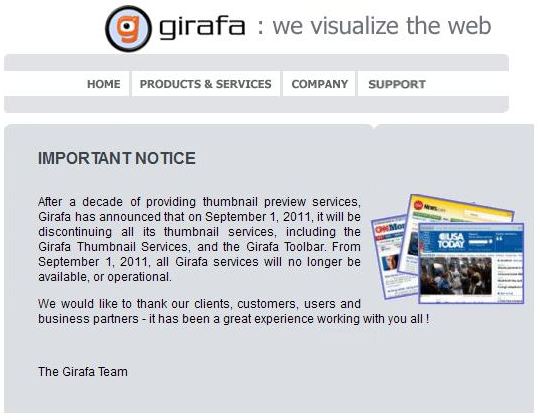
Google did acquire a couple of patents from Girafa this summer that cover the presentation of snapshots of links, like those in Google’s search results. When I wrote about the Girafa patent acquisitions this summer, the Girafa.com pages still appeared operational but visiting now; there’s a notice on the homepage that the company decided to stop providing services after September 1, 2011.
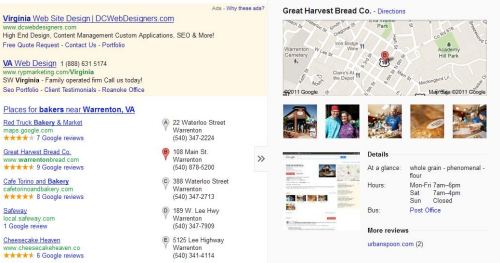
Since Google started showing instant previews for Web pages that appear in their search results, they’ve also added previews of Google Places pages, along with maps. Like the thumbnails of web pages you see in search results, the thumbnails for the place pages provide you with the chance to click through if you want to learn more.
As I mentioned, the patent doesn’t go as far as Google has in expanding what we see and learn about web pages within the search results, but it shows the need and the desire to make changes to search results pages to make them more usable, with less actual clicks. The patent is:
Expanded text excerpts Invented by Paul Fontes, Alexis Battle, and Corin Anderson Assigned to: Google US Patent 8,073,830 Granted December 6, 2011 Filed: March 31, 2006
Abstract
A system provides a list of search results, where one of the search results in the list of search results includes a snippet from a corresponding search result document. The system receives the snippet selection and provides an expanded snippet based on the snippet selection. The expanded snippet includes the snippet and other text from a subset of the search result document.
I’m not sure that the patent brings us much news regarding the technology that it describes, and I would suspect that some people would even question the need for this patent at all. The Girafa patents covering the showing of a thumbnail preview also may not seem to be that remarkable an innovation. Still, they were the subject of some pretty serious litigation between Girafa and companies such as Amazon.com, Ask, Yahoo, Snap, IAC Search & Media, Exalead, and others. Regardless of that, this post is more about the changes that we see at Google.
For instance, the patent states the problem that it perceived searchers were having with search results in the following way:
Users often use the snippets in determining which search result(s) to select. Because of the short length of the snippet, however, the snippet may not provide enough information for a user to make a meaningful decision regarding which search result(s) to select.
One solution might have been just to make those snippets longer. Seems like a good approach. But the short length of search results is also one of the positives of using Google, in that you can look at a good number of results at the same time to make a quick decision as to which pages you might want to visit in response to your query. In addition, by providing a flyout that can show you more text, or a thumbnail, Google made it easier to look closer at search results that might have captured your attention without visiting the page.
That’s one of the benefits of showing instant previews, but what are the costs? For one, site owners who rely upon the search engine to deliver visitors to their pages might not get those visits, especially if the design of their page isn’t persuasive or interesting enough to convince people to visit.
When Google makes changes such as adding Instant Previews, those changes can impact site owners as well.
In addition to hoping the designs of our sites look good to visitors when they arrive at pages, site owners now also need to consider how their design looks in thumbnail previews as well.
If the snippet that shows up for one of your pages may not be helpful enough for someone to decide whether to visit your page or not, the thumbnail that shows up in Google’s Instant Previews might be.
If you’ve been thinking about updating the look and feel of your site, that might be something to consider as you weigh the costs and benefits of making changes.